Review: 3D Porcelain Hippo Christmas Ornament
As a designer who spends more time than I care to admit staring at stitch charts and fabric swatches, I have learned to be skeptical of any digital asset that promises too much. When I first pulled up the 3D Porcelain Hippo Christmas Ornament, my initial reaction was one of cautious curiosity. It sits squarely in the realm of Illustrations and Graphics, specifically as a PNG file, which immediately raises the question: how does this translate from a flat screen to a tangible, stitched reality?
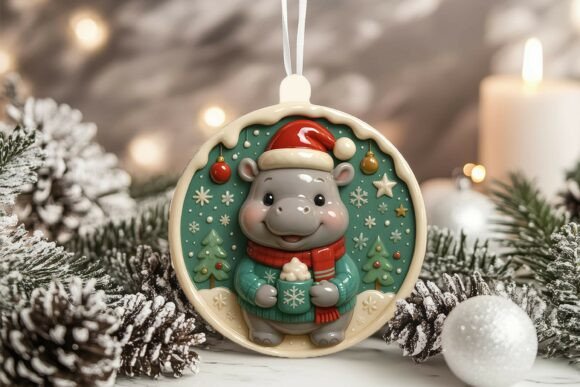
The design itself exudes a specific mood. It is not just a hippo; it is a stylized, circular ornament with a porcelain aesthetic. This visual personality suggests a certain level of refinement and nostalgia. For embroidery designers and small business owners looking to add a touch of whimsy without sacrificing elegance, this image offers a compelling starting point. But before you upload it to your machine or list it on your Etsy shop, we need to talk about what this actually means for your workflow, your finished product, and your customers.
First Impressions and Visual Personality
The strongest asset of the 3D Porcelain Hippo Christmas Ornament is its inherent shape. Being formatted as a circle ornament makes it incredibly versatile for layout planning. In the world of custom apparel and holiday embroidery, circular designs are forgiving. They work beautifully on the chest of a sweatshirt, centered on a tote bag, or clustered together on a baby blanket. The "porcelain" aspect of the title implies smooth lines and a glossy finish, which translates well to high-quality thread choices like polyester or rayon that hold sheen.
However, there is a disconnect between the "3D" label in the graphic and the 2D nature of standard machine embroidery. If you are expecting the final stitched piece to pop off the fabric with physical depth, you may be disappointed unless you are employing advanced techniques. The design provides a strong silhouette, but achieving that porcelain look requires careful selection of thread colors and potentially some clever shading techniques using fill stitches. It is a graphic that invites interpretation rather than dictating a single outcome.
Real-World Application: From Screen to Stitch
Let’s imagine a real scenario. You are preparing for the holiday rush and want to create a boutique-style line of personalized gifts. You decide to use the 3D Porcelain Hippo Christmas Ornament for a series of embroidered kitchen towels and aprons. This is where the design shines. The circular motif frames text beautifully, allowing you to add names or dates around the perimeter of the hippo without cluttering the central image.
For Etsy sellers and craft business owners, this versatility is gold. The design can easily be adapted into an embroidered patch for denim jackets or backpacks. It also works exceptionally well as a standalone accent on a nursery pillow cover. The theme is universally appealing—hippos are popular, and Christmas ornaments are seasonal staples—but the execution needs to be sharp to justify a premium price point.
When thinking about commercial embroidery, consider the audience. This design appeals to parents, grandparents, and anyone who appreciates cute, homey decor. It fits seamlessly into a collection of handmade products aimed at gift-givers. Whether it ends up on a sweatshirt embroidery project or a set of matching family pajamas, the visual consistency helps build brand recognition. Customers trust brands that deliver cohesive aesthetics, and a well-executed hippo ornament adds a recognizable signature to your work.
Technical Considerations and Fabric Choices
Not every fabric plays nice with every design, and the 3D Porcelain Hippo Christmas Ornament has specific requirements to look its best. Because the original graphic relies on clean lines and defined shapes, stitching it onto textured fabrics can obscure those details. A heavy waffle weave towel might make the fine lines of the hippo’s face muddy. Instead, opt for smooth cottons, linens, or tightly woven poly-blends for the cleanest finish.
One critical area to watch is stitch density. If the design includes intricate details within the porcelain pattern, running it at a high density on thin fabric could cause puckering. Always test on scrap material first. If you are working with stretchy knits, such as those used in baby clothes or fitted caps, ensure you are using a proper stabilizer to prevent distortion. The hoop size must be large enough to accommodate the full circle without cutting off parts of the design, especially if you plan to add lettering around it.
Another factor is color contrast. The "porcelain" look often involves light tones. If you are stitching this onto dark fabric, you will need a substantial underlay or a lighter base layer to make the design pop. Conversely, on white or cream backgrounds, the definition might get lost if your thread colors are too similar. Experimenting with thread colors is essential here; perhaps using a slightly darker outline thread to define the edges can help maintain clarity.
Where to Use Caution
While this design is robust, there are places where it should be used carefully. Avoid placing it on curved surfaces like baseball caps unless you have significant experience with cap hoops and stabilization. The circular shape can distort when wrapped around a curve, making the hippo look oval instead of round. Similarly, on very small hoop sizes, fine details may become indistinguishable after washing. If you are creating personalized gifts for clients who wash items frequently, ensure the stitch count is durable and the threads are colorfast.
Also, be mindful of the difference between a digital embroidery file and a graphic. Since this is provided as a PNG, you will likely need to digitize it yourself or hire a digitizer. A poor digitization job can ruin even the best source image. Look for a digitizer who understands how to handle satin stitch borders and fill stitch areas effectively. Pay attention to how they handle transitions between colors; harsh jumps can look amateurish, while smooth blends elevate the finished product.
Final Verdict for Designers and Sellers
The 3D Porcelain Hippo Christmas Ornament is a strong candidate for holiday-themed collections. It offers a balance of cuteness and sophistication that resonates with a wide audience. For creative entrepreneurs and makers, it provides a solid foundation for creating printable mockups to showcase your services before you even pick up a needle. It works well in design assets bundles, adding variety to a portfolio of animal or holiday graphics.
Ultimately, the success of this design depends on your execution. Take the time to review the hoop size constraints, check your stabilizer choices, and confirm licensing terms if you plan to sell the finished goods commercially. By treating this graphic with the respect it deserves—testing thoroughly and paying attention to detail—you can transform a simple PNG into a cherished personalized gift or a best-selling small shop product. It is a reminder that good design isn't just about the image; it's about how faithfully and creatively you bring it to life.