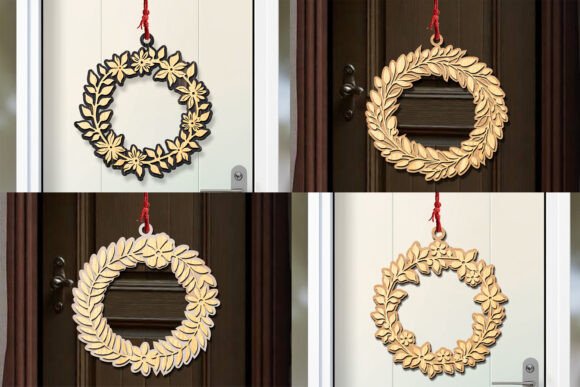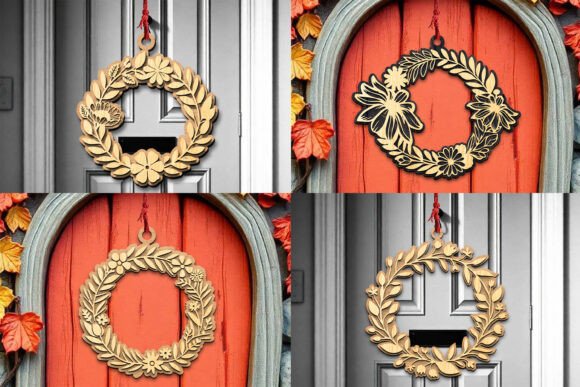
Reviewing Laser Cut 3D Wreath Ornaments SVG for Real Projects
As a designer who spends hours evaluating digital assets before committing them to fabric, I look at an Laser Cut 3D Wreath Ornaments SVG and immediately start thinking about the end product. It is not just about whether the file opens correctly in your software; it is about how that design will translate from a vector shape into a tangible, high-quality embroidered item. When you are looking at laser cutting and embroidery crossover designs, there is always a tension between the crispness of a cut edge and the softness of thread. This specific wreath design sits right at that intersection, offering a unique visual personality that can elevate everything from a simple holiday gift to a boutique-level commercial product.
First Impressions and Visual Personality
The moment you load the files—typically included as AI, EPS, SVG, JPG, PNG, DXF, and DWG formats—you get a sense of the structure. The term "Laser Cut" implies precision, while "3D" suggests depth and dimensionality. In the context of a wreath ornament, this usually means layered elements or distinct segments that create shadow and volume. Visually, the mood is festive yet structured. It feels less like a traditional, fluffy embroidery motif and more like a modern, architectural take on holiday decor.
This aesthetic makes it particularly strong for clients who want something contemporary rather than strictly vintage. The layout likely balances negative space with defined shapes, which is crucial for readability when stitched. If you are an Etsy seller or a small business owner, you know that the first thing a customer sees is the visual appeal in a listing photo. A design with clear lines and defined layers photographs beautifully, creating a professional image that suggests quality before the buyer even reads the description.
Real-World Application: From Digital File to Finished Product
I recently considered using this design for a custom order involving personalized aprons and kitchen towels for a holiday market. The challenge with wreath motifs is often clutter; too many details can make the stitching muddy, especially on textured fabrics like linen or heavy cotton canvas. However, the clean geometry of a laser-cut style design tends to hold up well because the eye expects sharp edges.
Imagine applying this to a sweatshirt embroidery project for a family reunion or a branded cap for a local business. The versatility here is high. Because the source files include vector formats like SVG and DXF alongside embroidery-ready files, you have options. You could use the SVG for a direct laser cut applique, placing it onto a contrasting fabric background, or you could digitize the concept into a machine embroidery design using satin stitches for borders and fill stitch for the interior textures. This dual potential adds significant value to the asset, making it a smart purchase for creative entrepreneurs who want to maximize their output.
For those selling handmade products, the "3D" aspect is a powerful marketing hook. Even if the final result is flat embroidery, the perception of depth created by strategic stitching or layering allows you to command a higher price point. Customers associate intricate, dimensional designs with higher effort and skill, which builds trust and encourages repeat purchases.
Strategic Considerations for Embroidery Designers
While the design has strong potential, no single file fits every scenario perfectly. There are specific areas where you must exercise caution to ensure the finished product looks professional.
- Hoop Size Constraints: Always check the hoop size relative to your garment. A large wreath might overwhelm a baby onesie or a small patch, while a tiny version might lose its detail on a large tote bag. Test the scale early in your workflow.
- Fabric Texture and Stability: This design works best on stable, woven fabrics. Avoid stretchy knits unless you are using heavy-duty stabilizers, as the tension required for dense stitching can pucker thin materials. Similarly, highly textured fabrics like bouclé or thick fleece may obscure the finer details of the wreath layers.
- Thread Color Contrast: The visual impact relies heavily on contrast. On dark fabric, light threads will pop, but you may need underlay stitches to prevent the dark fabric from showing through. On light fabric, darker threads provide definition. Always review your thread colors against mockups before committing to production.
- Dense Stitch Areas: If the design includes heavy fill stitch sections, be mindful of needle penetration. Too much density in one area can make the fabric stiff and uncomfortable, particularly on apparel like t-shirts or hats. Break up dense areas with running stitch or satin stitch outlines to maintain flexibility.
Technical Workflow and Quality Control
Before adding this to your catalog or starting a personal project, follow a rigorous testing protocol. First, inspect the small details. Are the inner curves of the wreath leaves or berries clear? If they are too small, they may not stitch cleanly and could require simplification in your digitizing software.
Next, test the design on scrap fabric that matches your final material. Use the same stabilizer you plan to use for the real project—cutaway for wovens, tear-away for non-stretchables, or sticky stabilizers for caps and patches. Run the machine and evaluate the result. Look for gaps in the satin stitch, puckering around the edges, or any distortion in the 3D effect.
It is also wise to view your design in black and white. This removes the distraction of color and helps you assess the balance of positive and negative space. If the design looks unbalanced in grayscale, it will likely look unbalanced in color. Additionally, confirm the licensing terms provided with the ZIP file. Ensure you have the right to sell finished items made with this design, especially if you are a commercial embroidery business. Some licenses restrict the number of units you can produce or prohibit resale entirely.
Final Verdict on Versatility and Value
The Laser Cut 3D Wreath Ornaments SVG is a robust asset for designers who appreciate clean lines and dimensional aesthetics. It bridges the gap between digital craft and physical textile art effectively. Whether you are creating personalized gifts, expanding your Etsy shop’s holiday collection, or designing commercial branding materials, this design offers a sophisticated look that resonates with modern buyers.
Its strength lies in its adaptability. You can use it as a standalone embroidery piece, incorporate it into a larger composition, or use the vector files for complementary laser-cut accessories. By paying attention to fabric choice, stabilizer support, and stitch density, you can transform this digital file into a premium finished product that stands out in a crowded marketplace. For the discerning maker who values both efficiency and elegance, this design provides a solid foundation for successful embroidery projects.