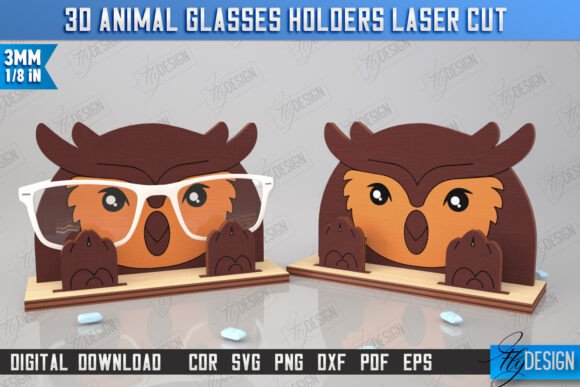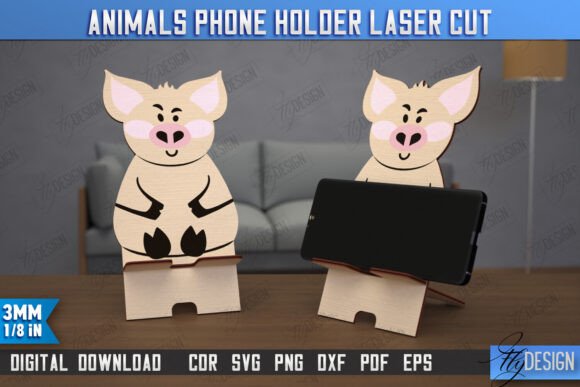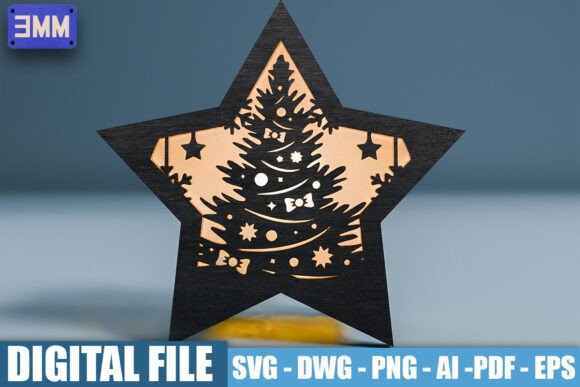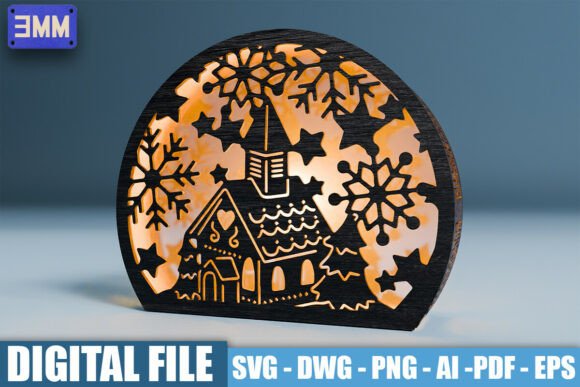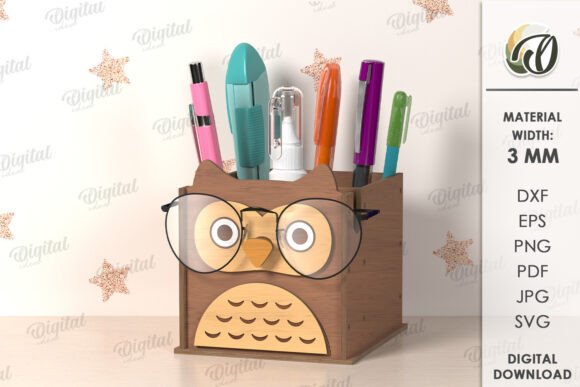
3D Glasses and Pencil Holder Laser Cut
When I first opened the zip folder for 3D Glasses and Pencil Holder Laser Cut, my immediate reaction was one of cautious optimism. As a graphic designer who frequently navigates the tight constraints of client branding, I know that not every digital asset is created equal. The product description explicitly states: "PLEASE PAY ATTENTION – This is a digital product. No physical goods will be sent – The photos are intended only for inspiration." This disclaimer is crucial. It sets the expectation that we are dealing with a graphic design asset meant to be integrated into a broader workflow, not a finished physical solution.
The visual mood of this piece is distinctly playful yet structured. It combines the whimsical nature of 3D glasses—a symbol of immersion and novelty—with the utilitarian form of a pencil holder. In the context of Laser Cutting and Stands, this creates a unique intersection of functional decor and promotional merchandise. For a small business owner or a handmade brand looking to launch a back-to-school campaign, a tech-themed office accessory line, or a quirky gift shop collection, this asset offers a strong starting point. However, before committing it to a real client project, a designer must evaluate its technical viability and aesthetic flexibility.
Visual Mood and Brand Alignment
The design inherently screams "fun" and "interactive." When used in brand identity work, it signals approachability and creativity. It works exceptionally well for brands targeting students, educators, tech enthusiasts, or creative professionals who appreciate a touch of humor in their workspace. The juxtaposition of eyewear and stationery suggests a brand that values both vision (seeing clearly) and execution (getting things done).
In terms of style representation, the laser-cut aesthetic implies precision. Even though this is a digital file, the visual language mimics the clean edges and intricate details of vector-based cutting files. This makes it suitable for modern design projects that favor flat illustrations, monochromatic schemes, or die-cut shapes. It fits naturally into marketing visuals for Etsy shops, print-on-demand stores, or local craft fairs where the "handmade" feel is a selling point.
Practical Application in Client Projects
I recently considered using a similar concept for a boutique stationery brand launching a new line of desk organizers. Here is how 3D Glasses and Pencil Holder Laser Cut performed across various design scenarios:
- Packaging Design: The asset serves as an excellent hero graphic on box inserts or hang tags. Its silhouette is distinct enough to be recognizable even when printed in single-color spot ink, which helps keep production costs down while maintaining high visual impact.
- Social Media Graphics: For Instagram posts and Pinterest pins, this illustration acts as a strong focal point. It breaks up text-heavy layouts and draws the eye immediately. When paired with bold sans serif fonts, it creates a balanced composition that feels both professional and engaging.
- Merchandise and T-Shirt Design: If scaled correctly, the design translates well to apparel. The outline-based nature of laser-cut styles often works beautifully on dark backgrounds, providing high contrast without requiring complex color palettes.
- Editorial Design: In blog posts or digital magazines discussing productivity hacks or desk setup trends, this asset adds a layer of visual interest that pure photography might lack. It anchors the content with a thematic icon.
However, it is important to note that this is a digital product. You are purchasing the rights to use the vector or raster file, not receiving a physical stand. Therefore, your role as the designer is to bridge the gap between the digital file and the final physical output, whether that is a screen display or a manufactured good.
Where the Asset Shines vs. Where It Struggles
To ensure the integrity of your client’s brand, you must place this asset strategically. It excels in large layout areas, such as website hero banners, poster headers, or large-format signage. In these spaces, the details of the laser-cut effect remain visible, and the playful theme can breathe without feeling cluttered.
Conversely, there are several environments where this asset should be used with extreme caution. Avoid placing it in small sizes, such as favicon implementations or tiny social media avatars, where the intricate details may blur or become indistinguishable. Crowded layouts are also risky; if the background contains too many competing elements, the visual hierarchy will collapse, and the viewer will miss the core message entirely.
Furthermore, minimalist branding requires clean lines and ample negative space. While this asset has clean lines, its thematic complexity (glasses + holder) might clash with ultra-minimalist aesthetics that prefer abstract symbols. Similarly, for professional corporate materials that demand strict seriousness, the whimsical nature of 3D glasses might undermine the desired tone of authority and stability.
Technical Checklist for Designers
Before integrating 3D Glasses and Pencil Holder Laser Cut into a commercial project, I recommend running through the following technical checks to ensure quality and compliance:
- Format Verification: Confirm if the zip folder includes SVG files for vector scalability or PNG files for raster use. SVGs are ideal for Cricut projects and large-scale printing, allowing you to scale the design infinitely without loss of quality.
- Transparency Check: If using PNG designs, inspect the alpha channel closely. Ensure there are no jagged edges or unwanted white backgrounds that would ruin the integration into layered compositions.
- Contrast Testing: Preview the asset on both light and dark backgrounds. Laser-cut styles often rely on solid fills or thick strokes; test them in black and white to ensure they maintain legibility across different color modes.
- Typography Pairing: Compare the asset with various font styles. A sans serif font typically complements the modern, geometric feel of laser-cut graphics best. Script or handwritten fonts might compete for attention unless used sparingly for accent text.
- Mockup Integration: Place the design on realistic product mockups. Does it look like a natural part of the scene? Does it enhance the perceived value of the product?
- Licensing Review: Most importantly, verify the commercial license. Ensure you have the right to use the asset for client work, especially if the end product involves mass production or significant revenue generation.
Final Verdict
3D Glasses and Pencil Holder Laser Cut is a versatile creative design element that brings character and specificity to a project. It is not a generic clipart; it tells a story about focus, organization, and a bit of fun. For designers working on small business branding, Etsy products, or print-on-demand items, this asset provides a strong visual foundation.
By treating it as a strategic component rather than a standalone decoration, you can elevate your design assets from simple illustrations to cohesive brand experiences. Just remember: the photos are for inspiration, but your design judgment is what brings the project home. Test thoroughly, respect the licensing, and let the unique charm of the laser-cut aesthetic shine through in your final deliverables.